How One Misfit Reindeer Became the World’s Most Famous Headlight
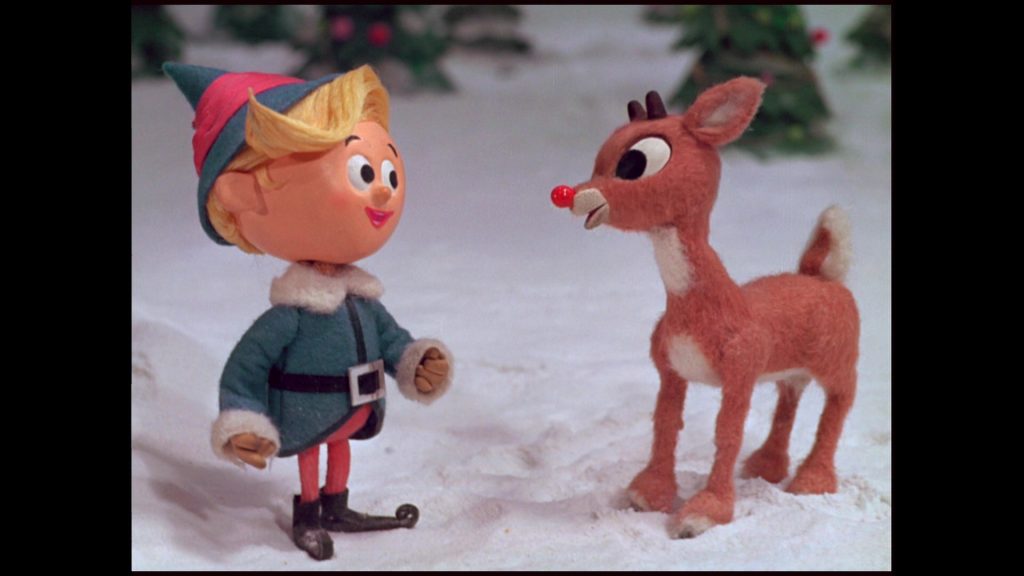
Some Christmas specials don’t just become traditions—they become rituals. Rudolph the Red-Nosed Reindeer (1964) is one of those. It’s the kind of holiday TV event that feels stitched into childhood itself, the kind you could catch halfway through and still sit down without question. Claymation snow. Burl Ives’ warm narration. A glowing red nose cutting through a winter storm. It doesn’t matter how many times you’ve seen it—Rudolph still shines.
Right from the start, the story sets up Rudolph as an outsider. Born with a bright red nose that literally lights up the room, he’s immediately told to hide it. Cover it. Be normal. Fit in. Santa himself—yes, that Santa—is kind of a jerk at first, which is always a little shocking on rewatch. But that’s part of what makes the story work. This isn’t a sugar-coated world where kindness comes easy. It’s a place where difference is uncomfortable, and acceptance has to be earned… sometimes unfairly.
Rudolph’s journey away from the North Pole is where the special really opens up emotionally. Along the way, he meets Hermey the elf, who doesn’t want to make toys—he wants to be a dentist. That one line of dialogue has done more emotional heavy lifting for misfit kids than most full-length movies. Hermey isn’t lazy or ungrateful. He’s just different. And watching Rudolph and Hermey bond over not fitting into the boxes assigned to them is quietly powerful, especially for a stop-motion special from the early ’60s.
Then comes the Island of Misfit Toys, which, let’s be honest, emotionally devastates first-time viewers every single year. A spotted elephant. A train with square wheels. A bird that swims. A cowboy who rides an ostrich. They’re not broken—they’re just unwanted. The concept is simple, but the metaphor hits hard. This is the moment when Rudolph stops being just a reindeer story and becomes something deeper. It’s about rejection. About being told you don’t belong. About wondering if there’s a place in the world where you actually fit.
And yet, the special never stays dark for too long. There’s always warmth waiting around the corner—usually delivered by Burl Ives’ Sam the Snowman, whose narration feels like a kindly uncle guiding you through a story he knows you need to hear. His voice wraps the whole thing in comfort, reminding you that this is a tale about hope, not cruelty.
The turning point, of course, comes when a massive snowstorm threatens Christmas itself. Suddenly, Rudolph’s difference isn’t a problem—it’s the solution. That glowing nose that once caused shame becomes the very thing that saves the day. It’s a simple payoff, sure, but it’s effective for a reason. It tells kids—and honestly, adults—that the thing that makes you stand out might one day be the thing that makes you indispensable.
Rewatching Rudolph now, it’s impossible not to notice how blunt some of its lessons are. The apology arc is fast. The acceptance comes only after usefulness is proven. Those are valid critiques. But even with those imperfections, the heart of the story still beats strong. It’s not pretending the world is fair. It’s acknowledging that fairness sometimes arrives late—but when it does, it matters.
Visually, the stop-motion animation still holds up in that beautifully imperfect Rankin/Bass way. You can see fingerprints in the snow. Movements are slightly stiff. And somehow, that only adds to the charm. It feels handmade. Earnest. Like something crafted with care rather than manufactured for speed.
Every year when Rudolph finally takes flight at the front of Santa’s sleigh, leading the way through the storm, it still feels earned. It still feels triumphant. And it still carries that little emotional punch that reminds you why this story has lasted for generations.
Because at its core, Rudolph the Red-Nosed Reindeer isn’t really about Christmas logistics. It’s about being different in a world that wants you to be the same—and learning, eventually, that your light matters.